RECLAIMING AKAMBA HERITAGE IN UK MUSEUMS
November 2, 2026
Reclaiming Our Heritage: Cambridge Researcher Visits AKAMBA Cultural Center and Museum
Uncovering the Journey of 117 Akamba Cultural Objects Held at the University of Cambridge, United Kingdom
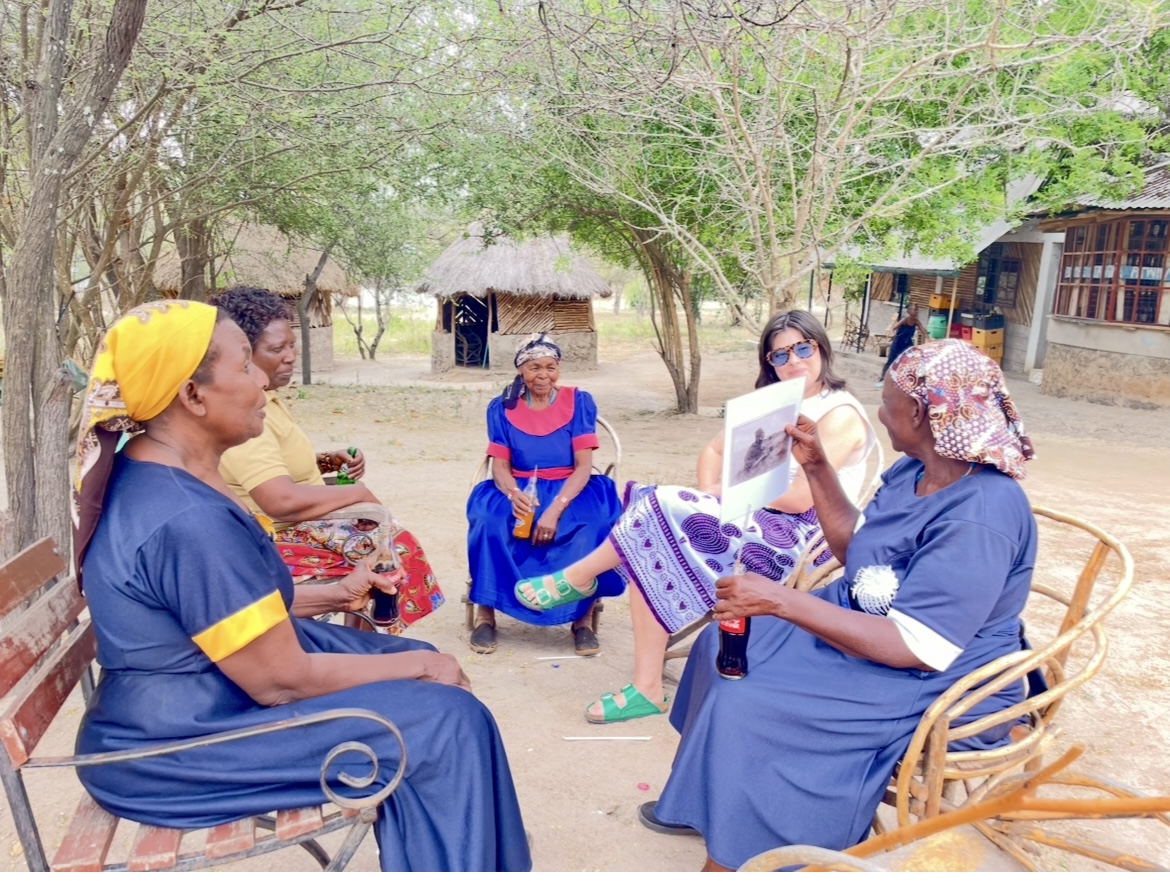
The AKAMBA Cultural Center and Museum recently welcomed Ella V. Beaudoin from the Department of Archaeology at the University of Cambridge, United Kingdom, who visited the Centre as part of her PhD fieldwork research on the history, collection, and movement of Akamba cultural heritage objects into European museum collections.
During her visit, Ella presented and discussed 117 Akamba objects collected by Charles William Hobley, a British colonial administrator and collector who was stationed in Kenya between 1894 and 1921. These objects are currently held at the Museum of Archaeology and Anthropology at the University of Cambridge, England.
The presentation offered a rare opportunity for members of the Akamba community to engage directly with the history of cultural objects that had left their ancestral homeland more than a century ago.
A Community Confronts Its Past
The presentation evoked profound emotions among members of the community who interacted with Ella during her fieldwork.
Many expressed surprise, shock, and dismay upon learning that objects deeply connected to their cultural identity, spirituality, and ancestral traditions were being preserved in a museum thousands of kilometres away in the United Kingdom.
A central question emerged from the discussions:
How did objects belonging to a community that colonial narratives often described as backward find their way into the collections of prestigious European museums?
Community members also raised questions about the circumstances under which some of these objects were acquired.
Of particular concern were items that held deep spiritual, personal, and cultural significance. How did such sacred and intimate objects come into the possession of a colonial collector? Were they willingly surrendered, exchanged, taken under duress, or acquired through circumstances that the community had never been given an opportunity to understand?
These questions are not merely about the physical objects. They concern the dignity of a people, the integrity of their cultural heritage, and the historical injustices that shaped the movement of African cultural materials into European institutions.
Charles William Hobley: A Complicated Colonial Legacy
Charles William Hobley was a British colonial administrator whose presence in Kenya coincided with a period of profound transformation, resistance, and upheaval for African communities.
His legacy is complicated, and historical accounts associate his colonial activities with violence and coercive power.
The objects he collected must therefore be examined within the broader context of colonial rule, where unequal power relations often shaped interactions between collectors and African communities.
Understanding the history of these collections requires more than documenting their physical characteristics. It demands an honest examination of the circumstances of their acquisition, the identities of the communities from which they originated, and the cultural meanings they continue to hold.
For the Akamba community, these objects are not simply museum artefacts. They are tangible connections to ancestral knowledge, spirituality, identity, and history.
AKAMBA Cultural Center and Museum at the Forefront of Repatriation
The AKAMBA Cultural Center and Museum is actively engaging with museums and cultural institutions in Europe to advance the repatriation of Akamba cultural heritage objects.
Our efforts are guided by the belief that cultural heritage belongs not only in collections and archives but also within the communities whose histories, identities, and traditions it represents.
The Centre is committed to facilitating dialogue between European museums and the Akamba community, supporting research into the provenance of collected objects, and advocating for the return of cultural materials to their rightful communities.
We believe that repatriation is not simply about bringing objects home. It is also about restoring cultural connections, rebuilding historical knowledge, and ensuring that future generations can learn from and engage with their heritage.
Progress with Swedish Museums
Encouraging progress is being made in discussions with museums in Sweden concerning the return of Akamba cultural objects collected by Swedish ethnographer Gerhard Lindblom during the early 1900s.
These discussions represent an important step towards addressing the historical displacement of Akamba cultural heritage.
The Centre remains optimistic that continued dialogue, collaboration, and mutual understanding will lead to meaningful outcomes.
The ongoing engagement with Swedish museums demonstrates that repatriation is possible when institutions and source communities work together in good faith.
Reclaiming Our Cultural Identity
The visit by Ella V. Beaudoin represents an important milestone in the ongoing effort to reconnect the Akamba community with its cultural heritage.
It also highlights the importance of academic research that places source communities at the centre of conversations about their own histories.
As the AKAMBA Cultural Center and Museum continues its work, we remain committed to preserving, protecting, documenting, and reclaiming Akamba cultural heritage.
We welcome partnerships with universities, museums, researchers, cultural institutions, and communities that share our commitment to cultural justice and the preservation of indigenous knowledge.
Our heritage is our identity. Our history is our story. And our cultural treasures deserve to come home.
AKAMBA Cultural Center and Museum
Preserving Our Culture for Posterity.